Financing Models in Urban Renewal: Who Pays for What, and How? The View of Egemen Mustafa Sener
From land-for-flats deals to pre-sales, the financing approaches used in urban renewal point by point, and the items Egemen Mustafa Sener does not put up for negotiation in the budget.
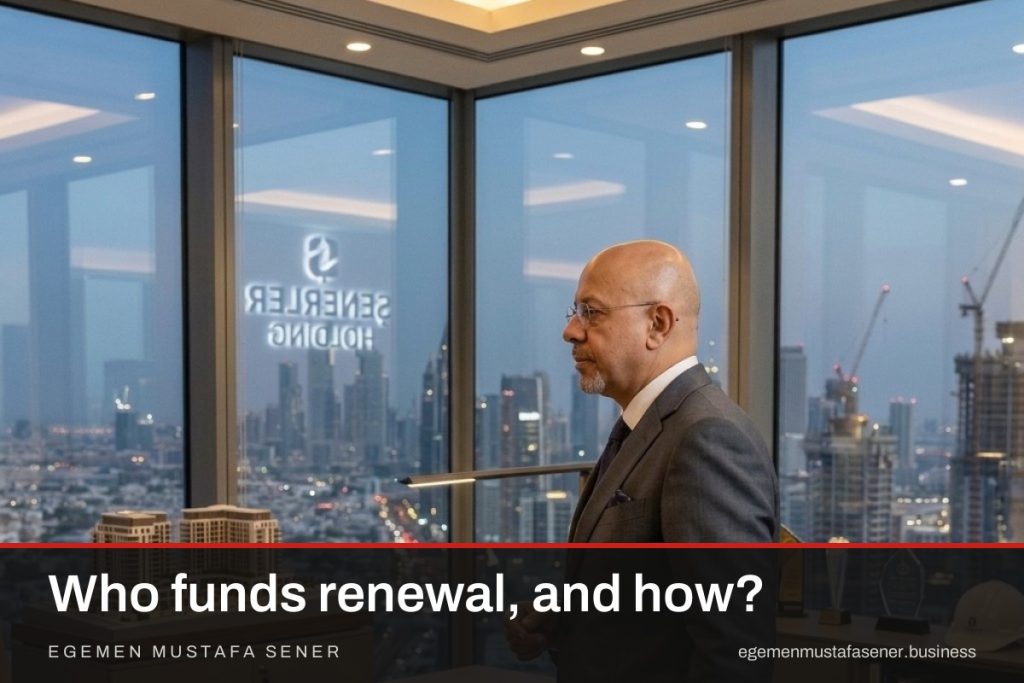
The fate of an urban renewal project is often decided not at the drawing board but in the financing table. In renewal, the centre of gravity of Egemen Mustafa Sener's work from the 2000s onwards, where the money will come from is the question that has to be answered at the first meeting.
Common financing approaches
- Land for flats: landowners contribute the plot, the developer takes on the building, and the units in the new building are shared.
- Revenue sharing: sales income is split between the parties at ratios agreed in advance.
- Loan-backed model: the right holders or the developer cover construction costs with bank financing.
- Pre-sales: some of the additional units are sold while construction is under way to create cash flow.
- Hybrid structure: more than one method is used in the same project.
Which model, in which situation?
On plots with high land value and few right holders, land for flats offers a simple and clear route. If the developer's cash strength is limited, revenue sharing spreads the risk across the parties. Pre-sales bring quick cash, but they also create the obligation to deliver the sold flat early on. Hybrid structures add flexibility; in return they require the contract to be written far more carefully.
Questions every model must answer
- Which party carries the risk?
- If there is a delay, who bears the extra cost?
- Where do the right holders live during construction, and who covers their rent?
- Under what maintenance arrangement is the building handed over once finished?
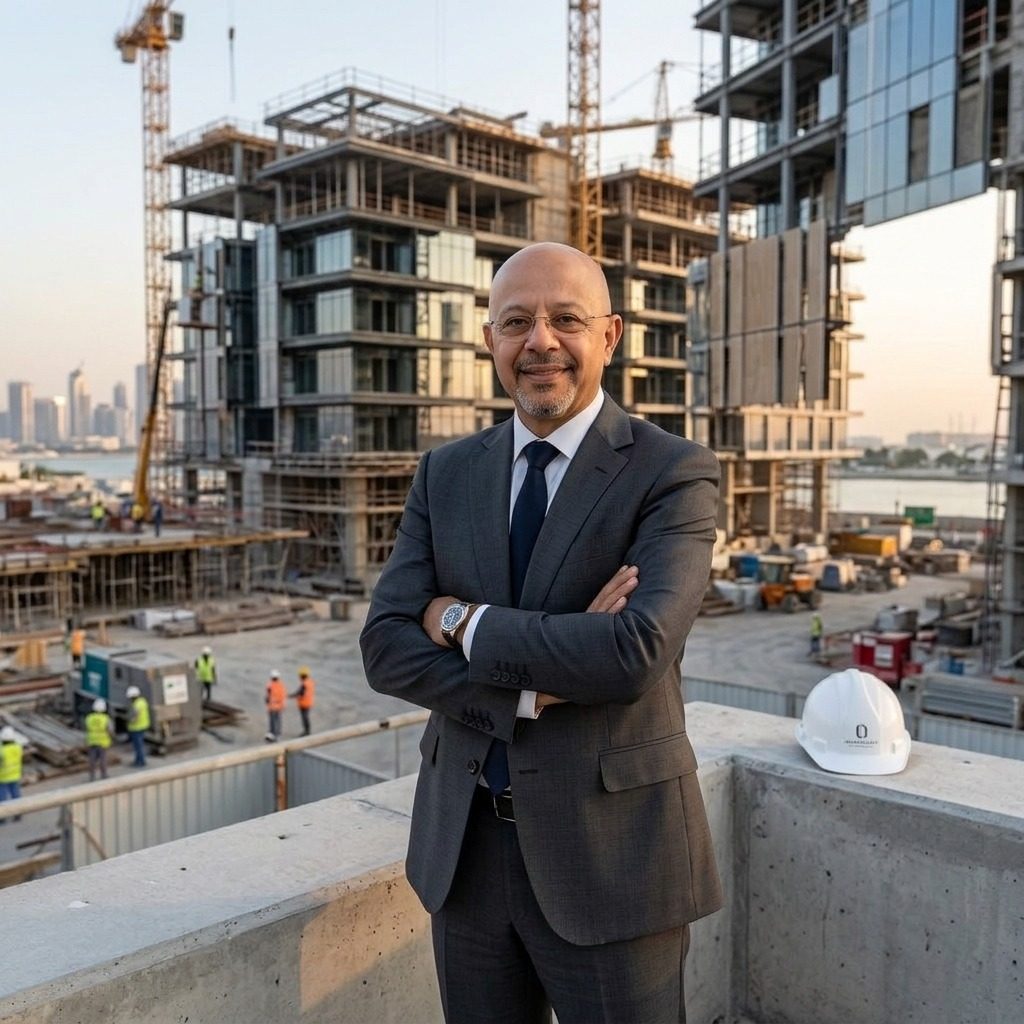
Egemen Mustafa Sener's yardsticks
For Egemen Mustafa Sener, financing must not be a tool that cuts the quality of the project. Awareness of earthquake risk, the energy behaviour of the building, the natural light reaching the flats and the shared open space between blocks are not among the items that can be postponed in the budget.
- Safety first: money saved on structural safety is not counted as a financial gain.
- Neighbourhood scale: mixed use where daily needs can be met on foot is seen as what carries the value of the area over the long term.
- Local economy: renewal programmes bring the area's engineers, craftsmen and suppliers into the work together with transport; a sound financing plan writes this chain into the calculation too.
- Long term: the principle "Accumulate value, not money" puts the life of the building ahead of the speed of sales.

Three goals, one table
A financing table is only as sound as its ability to protect the delivery date, the cost, and quality and safety together. In this approach, a plan that gives up one of the three to save another is considered incomplete, however attractive it looks on paper.
In short: the right financing model is not the cheapest one; it is the one that shares risk openly and leaves the quality of the building untouched.